Frequently Asked Questions
We answer the most common questions about our energy solutions. We aim to provide clear, straightforward information to help you make informed decisions about your energy future.
Solar & Battery
What to Know Before Installation
The questions we hear most before a solar or battery storage installation.
Yes. Panels respond to daylight, not direct sunshine, so they keep generating power on overcast days — output is lower than on a bright day, but UK systems are sized around average annual daylight for your postcode, not just sunny afternoons.
It depends on your roof orientation, shading, system size and how much of your own generation you use rather than export. Adding battery storage generally increases savings further. We give a written estimate based on your actual usage, not a generic percentage.
Most domestic installations are completed in a single day, with scaffolding going up the day before if needed. We handle scaffolding, DNO notification and commissioning as part of the job.
Not necessarily. Solar alone reduces bills by covering daytime usage; a battery stores your surplus for use after dark. We'll talk through your pattern at the survey rather than assume you need both.
Panels typically carry manufacturer performance warranties in the 20-25 year range, with inverters usually covered for 10-12 years. We confirm exact terms before you commit to anything.
South-facing roofs generate the most, but east- and west-facing roofs still produce a worthwhile amount. North-facing or heavily shaded roofs are the main case where solar may not be the best fit — we'll say so honestly.
Air Source Heat Pumps
Switching From a Boiler
Common questions before switching from a gas, oil or LPG boiler to an air source heat pump.
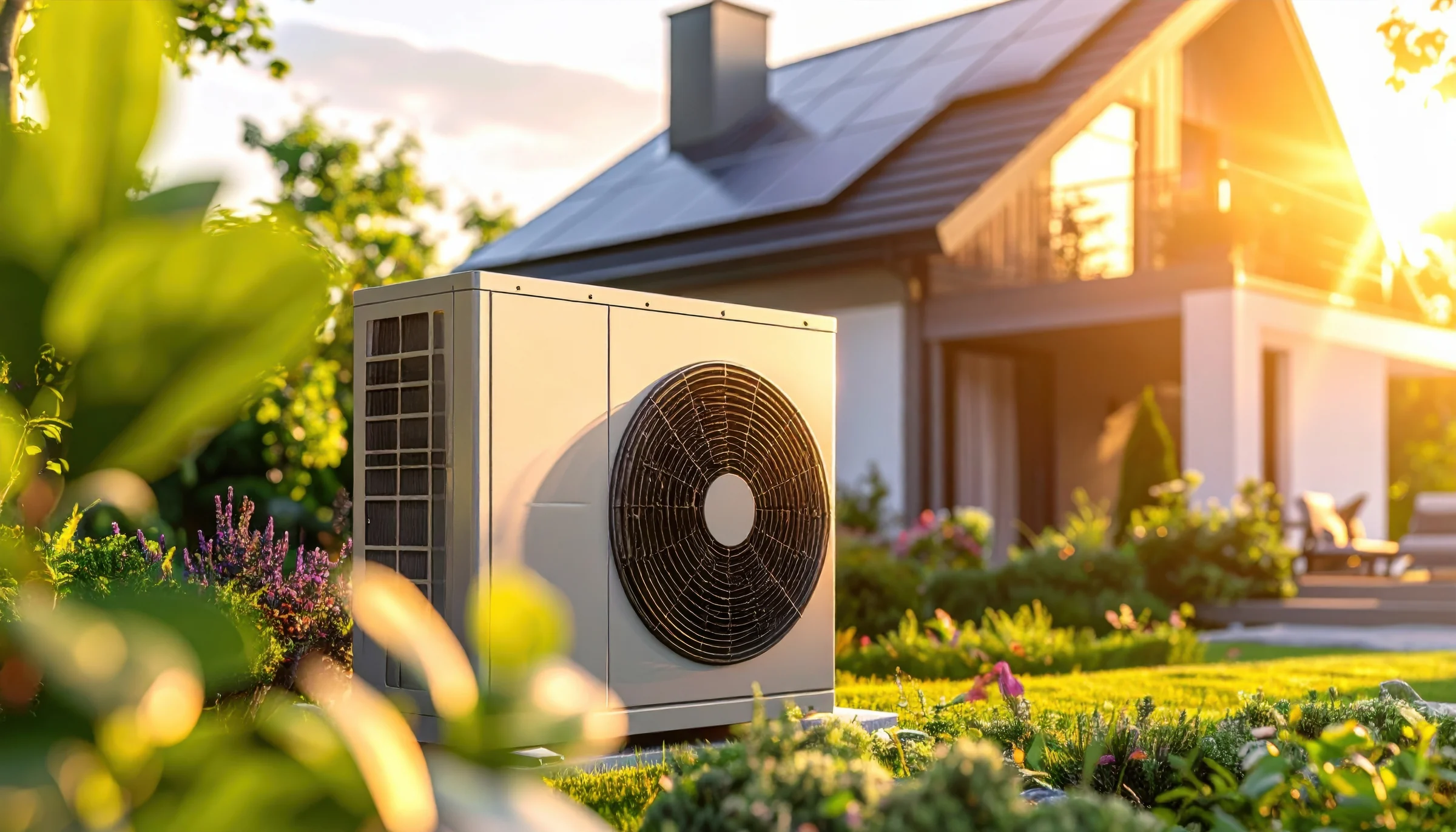
An air source heat pump extracts heat from the outside air, while a ground source system draws it from the ground via buried pipework or a borehole. Air source units are far more common in UK homes since they don't need garden space for ground loops.
Air source heat pumps use a fan, so they do produce some operating sound — similar to an outdoor air conditioning unit. A noise assessment is carried out as part of your survey to check the unit's position won't disturb you or neighbours.
Sometimes, but heat pumps run at lower flow temperatures than gas boilers, so smaller or older radiators may need upsizing. Our survey includes a room-by-room heat loss assessment, so any changes are quoted upfront.
Heat pumps produce several units of heat for every unit of electricity they use, making them significantly more efficient and far lower-carbon than a gas boiler over a year — a gap that widens as the grid supplies more renewable electricity.
Yes. Modern air source heat pumps are designed to operate efficiently down to sub-zero outdoor temperatures, which is standard for the UK climate. Efficiency dips slightly on the coldest days, and this is factored into sizing.
It depends on your current system, insulation levels and the electricity-to-gas price ratio. A well-sized heat pump in a reasonably insulated home is often comparable to or cheaper than gas, especially with the Boiler Upgrade Scheme grant.
Boiler & Insulation
Keeping Your Home Warm
Questions on boiler replacement, insulation upgrades, grants and maintenance.
Eligibility depends on factors like your current benefits, household income, property's EPC rating and existing heating system. Some routes, like ECO4, are means-tested, while others, like the Boiler Upgrade Scheme, aren't. We check which schemes you qualify for during a free assessment.
A straightforward like-for-like swap is typically completed in a single day. If pipework needs rerouting, or you're replacing a back boiler or relocating it, it may take a second day. We confirm the expected timeframe on your written quote.
Loft insulation and cavity wall insulation typically offer the fastest payback, since uninsulated lofts and walls account for a large share of a typical home's heat loss. Draught-proofing around doors, windows and loft hatches is a cheap, quick addition that's often overlooked.
An annual service is recommended for both safety and warranty compliance — most manufacturer warranties require proof of yearly servicing to stay valid. It also catches small issues, like a failing part, before they cause a breakdown in winter.
In some cases, yes — ECO4 can cover multiple measures on the same property, and for the Boiler Upgrade Scheme, outstanding loft or cavity wall insulation recommendations on your EPC generally need addressing before a heat pump voucher is issued. We'll tell you upfront if insulation work needs to happen alongside or before your heating upgrade.
Call us and we'll do what we can to prioritise your installation, particularly if you have no heating or hot water. Grant-funded routes can involve a processing period outside our control, so flag your situation early and we'll do what we can on our end.
Find Out What Your Home Could Save
Book a free, no-obligation survey.
Our accreditations